





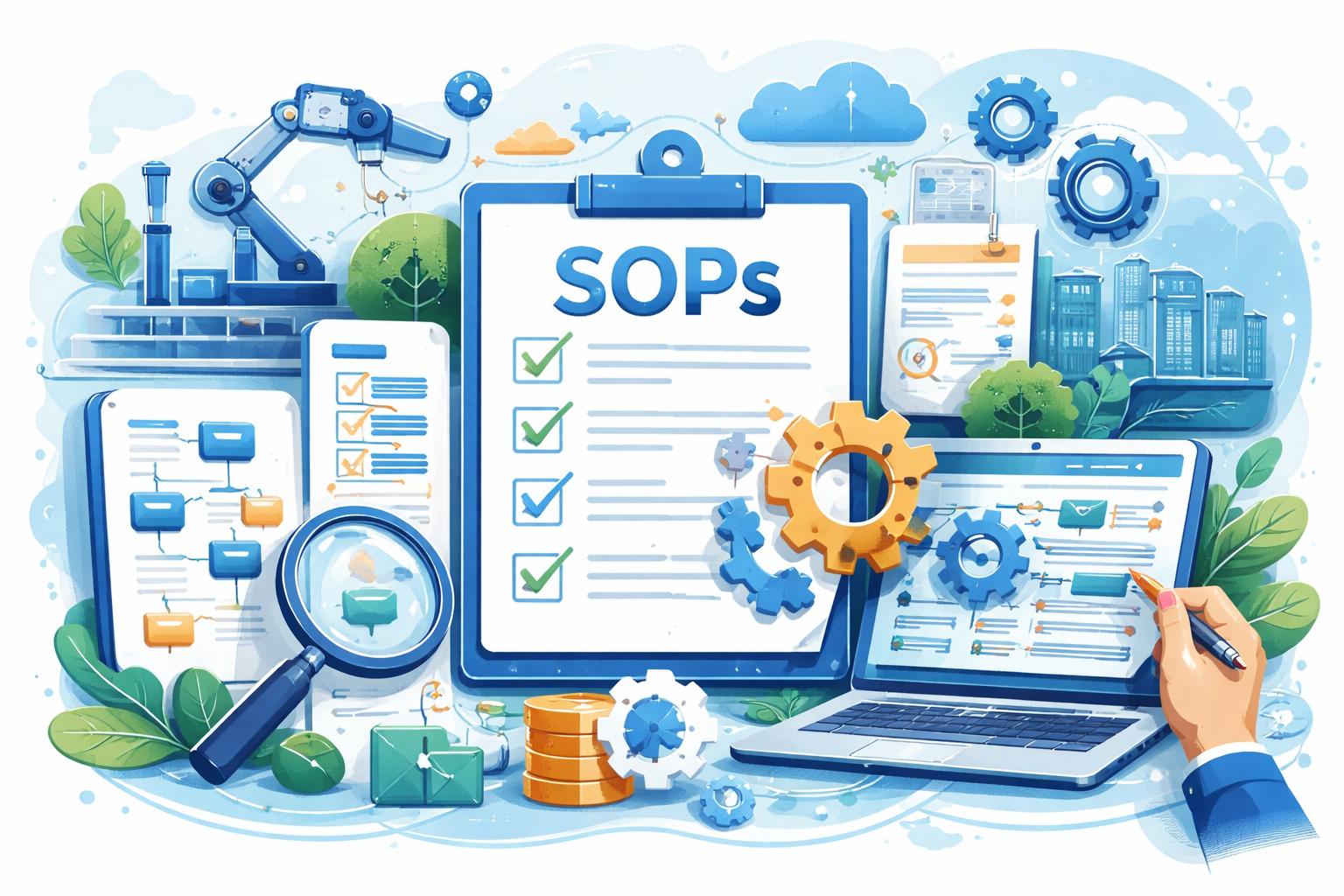
Introduction: The Problem Everyone’s Ignoring
Here’s something that might surprise you: the biggest reason digital transformation initiatives fail isn’t technology. It’s not budget constraints or employee resistance either. It’s the lack of solid SOPs in digital transformation planning. Think about it… You wouldn’t build a house without blueprints, right? Yet countless manufacturers are trying to modernize their operations without first documenting how things actually work today. They’re essentially trying to digitize chaos.
I’ve watched too many companies pour hundreds of thousands into new systems, only to realize six months later that their processes were too inconsistent to automate effectively. It’s heartbreaking, honestly.
The Real Impact: When SOPs Are Missing
Without proper standard operating procedures, your digital transformation becomes a expensive guessing game.
Here’s what typically happens:
- New software gets configured based on assumptions, not reality
- Employee training becomes inconsistent because there’s no baseline
- Integration projects take twice as long (and cost twice as much)
- You end up digitizing bad processes… which just makes them faster bad processes
The manufacturing sector loses approximately $50 billion annually due to poor process documentation, according to the Manufacturing Institute. That’s not just money; that’s competitiveness, market share, and sometimes survival.
The Solution: SOPs as Your Digital Foundation
Here’s the thing about SOPs in digital transformation: it’s not just about having procedures written down somewhere. It’s about creating living documents that become the backbone of your modernization efforts.
Start With Current State Documentation
Before you can transform anything, you need to know exactly what you’re working with. This means:
- Mapping every critical process step-by-step
- Identifying decision points and variations
- Documenting who does what, when, and how
Build SOPs That Support Technology Integration
Your procedures need to be designed with digital tools in mind. This isn’t about changing everything; it’s about structuring your processes so they can talk to your new systems.
Create Feedback Loops for Continuous Improvement
The best strategies for including SOPs in digital transformation include built-in mechanisms for updates and improvements. Your processes should evolve as your technology capabilities grow.
Making SOPs in Digital Transformation Work
Remember, this isn’t just about compliance or checking boxes. Well-designed SOPs become the bridge between your current operations and your digital future.
They provide the consistency your new systems need to function properly. They give your team clear guidelines during transitions. And they ensure that your investment in new technology actually delivers the results you’re expecting.
Conclusion
Your digital transformation doesn’t have to be a leap into the unknown. With solid SOPs as your foundation, you’re building on documented reality instead of hopeful assumptions.
The manufacturers who get this right… they’re the ones who see real ROI from their technology investments. They’re the ones whose employees embrace change instead of fighting it. And they’re the ones who stay competitive while others struggle.
Ready to build SOPs that support your digital transformation? Let’s discuss how our Value Stream Mapping and Digital Transformation services can help you document your current processes and design procedures that work seamlessly with modern technology. Contact us today for a consultation.
 TSVMap is committed to enhancing your manufacturing processes and providing expert consultation on your IT solutions, striving to maximize their effectiveness and efficiency. If you require assistance with…IT Solutions, Assessment, Consultants, ERP Systems, MRP Systems, Automations, or Cyber Security. Contact us today at 864-991-5656 or Email info@tsvmap.com.



0 Comments